
6th November 2023

Listen
Listen
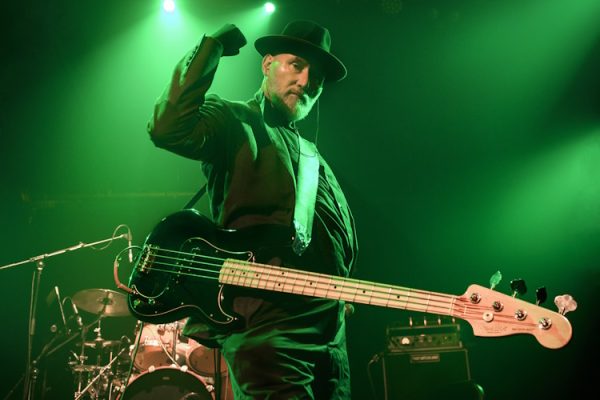
Jah Wobble’s career has been multi-faceted and spaned both decades and genres. From award winning collaborations to era defining albums, it’s a musical life hard to summarise. I chatted to John about his new album
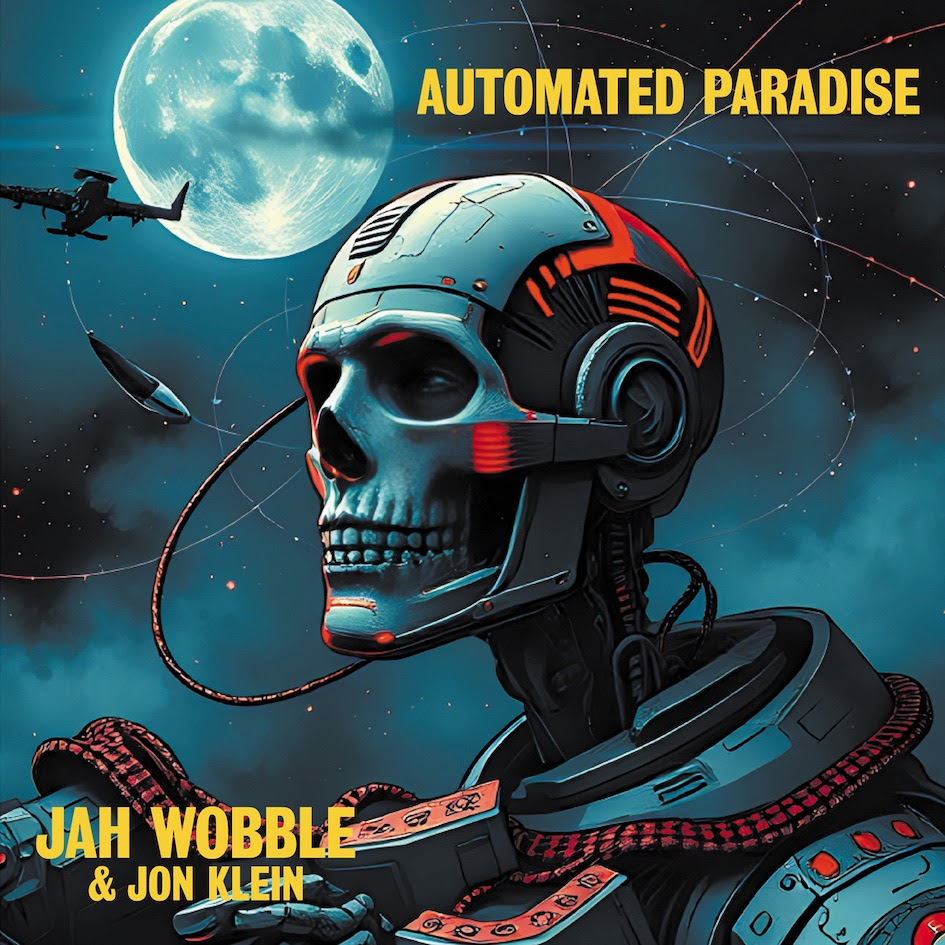
I did it with John Klein who’s got quite a pedigree. He’s played with Siouxsie & The Banshees and the Specimen, so he’s well know as a punk and post-punk guitarist. He’s a very powerful guitarists. I wrote the lyrics for the album and do the singing as well as playing bass. We co-produced it, and it’s very much the zeitgeist and craziness of this technological age. It’s like a disturbed ants nest society at the moment. Politically, there’s upheavals and wars, so this album is a snapshot of the Tower of Babel that we’re inhabiting.
I’ve worked with him before going back to 2020, in fact even before that. I met John when he videoed a gig that I did in South London in about 2017. That’s when I first met him and really got on with him. We work on a community project together in South London called Tuned In. I started it, and the original idea was to combat loneliness, probably in old folks. Older men especially have real problems in discussing any problems that they might have, or reaching out for friendship and company. I based it around music because that’s all I know. I was thinking we could get guys who used to be in bands, and people who want to learn bass or guitar or whatever could come. We ended up having quite a few women come and a few younger people. It’s a really wide demographic of people. We’ve got lots of people who’ve have mental health issues and homelessness issues through to people who are holding down very strong jobs in the financial sector. It’s in Merton which is a East London borough which is as poor as any other borough. It has the social challenges that other poor boroughs have got but the West side, Wimbledon, is reasonably well to do. So, its a real mix of people.
We started in 2019, and we built a studio as well. During COVID, we worked together on a new version of the Public Image Ltd. classic ‘Metal Box’. We called that ‘Metal Box Rebuilt In Dub’. We did another album called ‘Brief History of Now’ as well as working on a few singles for an American record company. We also worked on singles with Ken Boothe and Horace Andy, two reggae giants. So we’ve done quite a bit of stuff together in just a few years before this album. We’re so relaxed in each other’s company, we really get along and he’s a very bright, nice person John so it’s fun. We’ve got a little studio to work in. You can work remotely now, you don’t need to have a studio but it’s nice to sit in a room with somebody you like and make music.
It does happen. I’ve done a thing for a guy in New Zealand recently. We never even looked at each other or did a Zoom. It was all just done on email, and then you get the files and you do your thing. I was very suspicious about Zoom meetings and all of that. I thought they were a temporary measure. They’re not the real thing. But now I’ve sort of realised well if you focus on it, it’s as good as being in a physical meeting and you’re saving so much energy in not having to take time travelling around. But yes, having said all that being in a room has got to be the thing to make music.
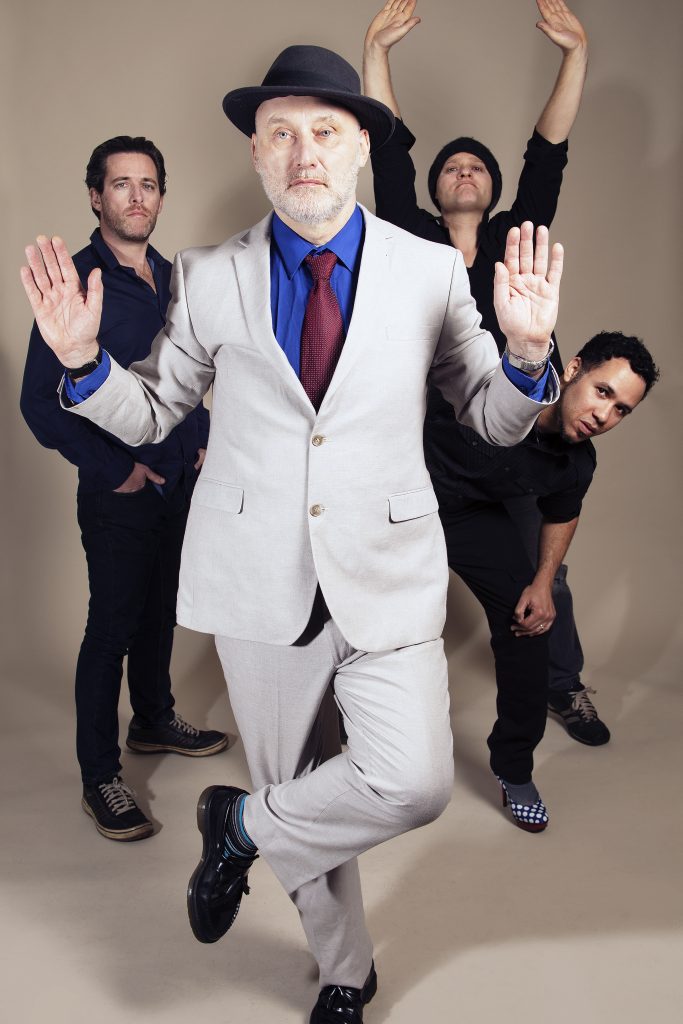
Bill Laswell. Bill’s not well at the moment. He was always great fun and I’ve got tremendous respect for Bill. I loved working on the project he bought me in on. Ginger Baker, to various dub albums. Obviously Sinead O’Connor in terms of charisma and personality. She really had that ‘star’ thing in droves. That was really special. Natacha Atlas was another singer who I worked with, she has a fantastic voice that would light the room up when she sung. There’s been a lot of people, but off the top of my head they really stand out.
And obviously, working with Brian Eno was really a big deal as well. He’s a bright guy and that was a buzz. I really liked that album and I think it’s aged very well that album I did with him.
Only if there’s a demand for it because it’s such a big deal to learn new songs. Sometimes it can be demanding in terms of production. Replicating what you’ve done in the studio on the road can be really tricky. We dreaded it with the last album more than this as it’s a lot more simple. The last album had all string parts and this that and the other. This at least is very simple drums, guitar, base, vocals only so it’s doable. We would only put the time into it if there was a definite demand for it. John comes out with me when we do ‘Metal Box’ and there’s a demand for that. Yet again that was a big deal producing the sound on the record and we had two guitarists to handle all of the parts. We have to use some loops live in order to recreate some of the parts. I’ve got a big set within ‘Invaders of the Heart’ my band that we kind of add to. If there’s a song off a particular album that we like, that goes off that set. If half a dozen promoters come forward and will pay you £25,000. If you love the album then you go and learnt it, but until that happens no.
My favourite place is Glasgow which I don’t think we’re doing. Glasgow is one of my favourite places to play in the world. I like Canada. It’s a really great place to play. In this country, Liverpool’s fun, my wife [Liao Zilan] runs the Pagoda Centre, my boy lives in Liverpool. I live in Stockport so I’m over in Liverpool to see my granddaughter regularly. I’ve played Liverpool with my sons. My younger boy lives in London, but he’s up in Liverpool all the time. It’s a bit of a home-town gig really for us.
London’s changed so much. When you play London its weird. The parts of London you play and the venues are really different now. Also, over the years you’ve started doing places like Milton Keynes, Shrewsbury, which wouldn’t have been the case years ago. We are doing Stoke in a few weeks, but you’re more likely to do Leek than Stoke. We’re playing Todmorden which is a great place to play. It’s become the new Hebden Bridge. You’re more likely to play that than Manchester. There’s these arts scenes developed in little towns. It’s the same in America. You’re more likely to go to Portland Oregon than maybe Chicago.
In London, you’d only ever play the West End and then the East End where I’ve come from became a gig. Last time we played out in Walthamstow which was a great crowd. It was a real buzz. You’d never have thought you’d play in the middle of nowhere in a reservoir. It’s quite interesting and post-modern now. The South Coast is very vibey. Lots of people decant from London. Wherever there’s a buzz, it’s always changing. Anywhere that people are into it is a great gig.
It’s the old saying, you can predict anything but the future. But to be fair, I was with Island [Records], I turned down another deal and went off to form another label knowing things were going to go digital. You had the means of production yourself, and you had the chance to run businesses yourself. Technology made it easier to run businesses yourself. You can be your own engineer and produce your own music. I could see that coming.
I told a lot of people who run studios to downscale, they ignored me. Music itself would probably get cheapened. They were still dependent on having lots of people at record companies doing stuff for them, and I said to them they should look to scale down and be a cottage industry. Niche was the way forward. I did see a lot of it and most people just ignored me. But, because I was well prepared that’s why I’m talking to you now.
It’s very much for better and for worse because to be honest I was happier the way things were in the 70s and 80s. You could hustle money, there was less competition. I think something like 100,000 tracks go on Spotify a day, and a lot of it’s probably AI. It’s very very difficult, but I still have a belief in the music. Duck and dive, box clever, and keep on going.
There’s Instagram musicians and YouTube musicians. My younger boy puts up stuff, and my elder boy is quite condemning of it. He looks down his nose at all of the YouTube musicians, he sees a lot of it as fake. I can understand that. It has it’s point of view. I’ve met Danny Sapko who’s a very talented bassist. I’d seen his stuff and I knew he could play. He’s played in bands all his life, and is now a very successful YouTube musician. It’s all part of it now.
Having said I’ve been a know it all up to this point, I’m starting to now not know how you go with Social Media and how you make that work. I’m 67 so I’ve got to be closer to the end than the beginning now. I’m not too worried if I don’t keep up to date with every trend right now.
You can buy tickets to see Jah Wobble on tour here: www.songkick.com
You can watch the visualiser for lead track fading away ‘here’: https://www.youtube.com/watch?v=znayHGEAdv0