
6th November 2023

Listen
Listen
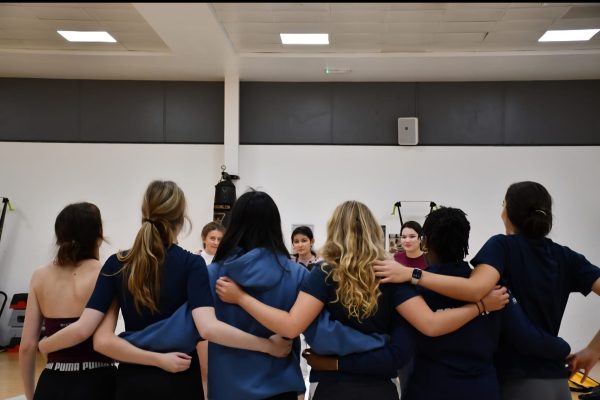
Our very own Liverpool University’s Women’s fencing team has shot to the top of the Northern Tier One this season, making a comeback from last year’s demotion. Read below as I interview the Womens Captain and Club President as they share their thoughts on this success, and the importance of having a strong united team.
But first, some background. Fencing orignally started as a form of military training in Germany and Italy around 14th/15th century, and involves the use of three swords; eppe, foil and sabre. Sabre involves slashing and stabbing anywhere above the waist and is the most aggressive. Foil can stab anywhere on the torso below your neck. Epee, the least agressive of the three, focuses on the entire body and is only stabbing.
C: It’s been a lot of things, I mean we got demoted last season, so we’ve been against easier opponents, and the girls are fantastic. The new people that have joined the club have been absolutely incredible like blown me out of the water with how good they’ve been. It has really been a contribution of the people involved, the attitudes that we’ve had, and the fixtures we’ve been assigned. Also, how many home fixtures we had as well.
P: Team spirit has brought real success to this season. We have often been in a tight position with team members being unable to play requiring many to step up to the piste. They went out of their comfort zones, doing weapons they aren’t used to and really gave it their all. I also think that getting the team together outside of training and keeping a positive attitude has brought great success.
C: Oh, it’s so important. Because when you get off piste its always really important hearing what else you could’ve done better. Having that feedback and saying exactly how it is. We all know that if someone gives you advice that’s just what it is, advice, not an attack on someone’s character. It makes it a better experience having a good team; we have hours and hours that we can spend on a coach together going to away matches, and then hours in the hall not fencing. I mean in total you might be spending only 15 minutes on that piste and the match might be 3 hours long, so that’s a lot of time you’re sat off with your teammates.
P: I think that whether the team is strong or not, the fact is we are a team. I think that knowing we are a team and that we are all in this together, on and off piste, has brought us our success this season. When you are fencing it is just you on that piste, or at least it feels that way. Being able to look back at your team after a rubbish point, bad refereeing call or simply struggling in that moment, and hear encouraging words makes all the difference. Also having strong morale as a team and all working together makes training and competitions run much more smoothly, which means more time to do the sport we love!
C: That’s a really interesting question. I think because fencing as a whole doesn’t get a lot of recognition. It is one of those sports that is not as popular as other sports, and we’re used as a sort of bargaining chip for other sports benefits. There are more men in the team so obviously their going to get more funding, so I don’t feel hard done by.
P: I think that the women’s team at the university has got quite a lot of support from the university. We have been in higher leagues than the men, held more responsibility than the men. We have had a going on 6-year female presidency, and so we get a lot of recognition from the AU. Female teams at uni often do not get as much attention, but I do think that fencing has been an exception. That being said, I think the whole fencing community is not as well supported or recognised as much as it should be. I wish it was more well known throughout the sporting community.
C: Attitude has been the important thing. I keep yelling at them PMA, which is positive mental attitude. They’re not allowed to talk badly about themselves before they go on, they’ve got to go into the sport in a positive mindset. I mean I am so bad at doing what I preach myself, but I try and motivate the girls to be positive. Also, the attitude of working together as a team and being connected and involved, something we didn’t have as strongly last year.
C: I think reframing it, I mean cost is a big thing, because it is very expensive and quite daunting. It’s quite elegant and dainty, it’s a lot like dancing, it’s a routine. You’re reacting to the way someone else is, but it’s a dance, just where you want to beat someone up. I think if people realised how difficult it actually is to have those skills and muscles, as well as using such a high level of coordination that other sports don’t necessarily. Emphasising these benefits, I think, would help get women to join.
To read more sport, please click here: