6th November 2023

Listen
Listen
Straight after listening to Bridgers’ new album, I knew I had to write an article about it. Album of the year.
Six years after 2020’s ‘Punisher’, Phoebe Bridgers has released her third album – and it is incredible, in my opinion some of, if not her best work.
‘Lost Weekend’ is classic Phoebe; optimistic melancholy pop, apocalyptic themes and bittersweet nostalgia that reeks of resentment about her childhood and past relationships.
Right away we are thrown into the vibe of what we can expect this album to sound like; floaty, almost other-worldly-type synth, and lingering notes that seem to hang around in the listeners’ ears.
We’re at her dad’s funeral:
‘Crying in a suit and tie/ But you should see the other guy/ One more time for old time’s sake/ I’ll watch him get carried away’
She has often referenced her strained relationship with her late father in her discography, and this feels like a form of goodbye to him, albeit paired with a dad joke.
‘When I am on the outside, watching/ I am on the outside, watching/ I dive into the crowd/ And they never let me hit the ground.’
Bridgers utilises a vocoder to begin with, which makes her come across as robotic, a cog in the music industry who relies on her fans to repeatedly lift her up and keep her safe. The talk of being on the outside watching almost seems to me that she never truly feels present in the moment, just floating above herself, a birds-eye view onto her own life.
She switches between her own natural voice with no vocoder, to her voice with the vocoder and by the end of the track, the two blend, her two realities becoming one. Bridgers’ feels present but never truly in the moment.
‘I’m frozen in place/ But not afraid.’
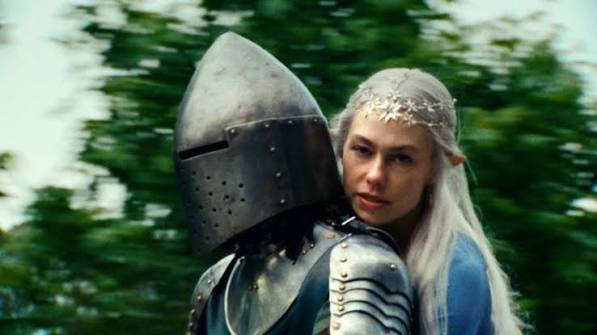
The first single ‘Lost Boys’ from the album really excited me, as I thought it sounded like ‘Kyoto’ from the 2020 ‘Punisher’ album – an upbeat instrumental but optimistic (if not slightly pessimistic) lyrics. The use of trumpets and fingerpicked guitar create a deceptively bright ode to a certain type of man.
The chorus seems triumphant:
‘Lost boys/ Never grow up, never go home/ Lost boys/ Never spend their lunch money / Lost boys / Never grow up, never get old / Lost boys/ Find me.’
Bridgers’ then reminisces about past experiences, presumably about a past love interest or friend and admits that she doesn’t feel bad, but she’s sorry. To me, this track reminds me of young men who refuse to age or mature, classic Peter Pan syndrome. They run when things get hard or serious, but refuse to see the error of their ways.
Now, what really excited me about this album is the fact that Bo Burnham, Bridgers’ current partner collaborated on this album, being credited for both songwriting and vocal credits. Burnham sits on the songwriting credits for ‘Lost Boys’ and you can really feel his influence; his witty yet unabashedly critical examination of these men in this song only emphasises what a great song it is, and a great first single for ‘Lost Weekend’.
We now slow down to a gentle acoustic guitar song.
‘Turning twenty-one/ I’m not, but I was once/ Certain, always/ Now all I know is the ending/ This is gonna kill me’
The song builds into the second verse through an intimate, sleepy instrumental before drums enter which adds a bit more weight to the song.
She addresses Burnham before repeating the chorus until the track explodes; heavy drums, bass and organ vibrate Bridgers’ vocals creating a feeling of instability.
‘Tamam Shud/ Let’s go missing’
Again, we are met with classic Phoebe Bridgers instrumentals, piano, gentle fingerpicked guitar with mandocello. It feels like almost childlike, reminiscing on what once was and what is now.
‘You deserved better/ You wanted me/ So, let’s see how long we can go without talking/ Watch me pretending to sleep/ I’m next to you, you’re next to nothing’
Towards the end of the song, the instrumental is carried by a woman vocalising, which carries us along nicely to the conclusion of ‘The Governor’s Waltz’:
‘And she can pretend to be me/ Since she took my place in my bed on that stage’
Presumably, this is targeted towards Gracie Abrams, Paul Mescal’s girlfriend after Bridgers, but it doesn’t come across in a way that appears to be a dig towards Abrams, more so an acceptance of the way things turned out.
This song is undeniably about Burnham.
A celebratory, synth-filled joyous track that celebrates their love is more than welcome and creates a nice break in the album for an truly upbeat track filled with energetic drums giving the vibe of a modernised 80s love song.
‘Bobby, this could be the end of wanting/ Now I sleep in your shirts/ And you live in my house‘
Burnham also takes part in the vocals of this song, only adding to the triumphant celebration of their love.
‘I exist only if you’re watching/ This could be the end/ This could be the end/ This could be the end/ This could be the end/ Now I don’t know if I can make it tonight/ But what are you doing the rest of my life, Bobby?
The song fades from joyous celebration to gentle electric keyboard, almost as if we’re listening to them settle down and relax.
I truly, truly adore this song.
The song opens with gentle synth, as Bridgers’ recalled an experience with a past lover:
‘Then when the van broke down in the heatwave/ You took off your pants on the side of the freeway/ I had the thought that you would outlive me/ I loved you, and you couldn’t forgive me for that’
She references her past relationship to Mescal; ‘I’m supposed to be married, but I called it off’.
There is a sense of regret in this song, like she’s almost ashamed she let someone who’s not in her life anymore see who she truly is behind the facade.
We then get about a minute and a half instrumental, allowing both us and Bridgers to wallow in what she’s just sung about, as we get to experience her breath building and building until a minute is left in the song and it bursts. It is raw and emotional, and feels like a sonic panic attack; uncontrolled and relentless, angry yet afraid – then it just stops.
‘It is not this house that’s haunted/ But I don’t want it either way’
This folky track feels like an escape, one that embraces leaving things that do not serve you behind and moving onto pastures greener.
‘We’re gonna get on the road again/ I’ll be waving from the plane’
She seems to reminisce about performing, ‘So I’m putting on my makeup/ While they’re lighting the stage up’.
Bridgers seems cheerful, rejecting those who do not accept her for who she is and not changing herself for anyone. It feels like full self-acceptance, defiant and proud.
‘Panorama’ has minimal lyrics, only 5 lines and I think that this works for this track. Her signature style of instrumental plays for just under two minutes, folky and gentle, accompanied by gentle drums and synth, as well as fingerpicked acoustic guitar.
By the time the lyrics enter, the instrumental has slowed and simplified to something of a whisper, like static on a TV, as if Bridgers is staring into space sat on her hotel bed, staring out of the window onto a large view while it stares right back at her.
‘A panorama hotel room/ I chose this number for the view/ Bags exploded all over the floor/ And someone’s at the door/ If you’re drinking, then I’m drinking’
The instrumental ends abruptly, like the TV has been turned off.
Here we listen to a classic Phoebe Bridgers track which recalls her childhood and her relationship with her father. It is inherently vulnerable, and yet there is a heavy undercurrent of bubbling anger and resentment that this is what she had to experience in her childhood.
‘You left your suitcase by the bed/ Like you needed to know you could go whenever you wanted’
It seems her father was never truly there, and whenever he was, there was a feeling that he could just leave at a moment’s notice; because he wanted to or because he didn’t want to be around his family anymore.
She recalls traumatic incidents she was exposed to and experienced at a far too young age, looking back on them with adult feelings, and there seems to be a sense of wanting that she wished her childhood could have been different, “normal”, because she grew up thinking what she experienced was normal when in actuality, it wasn’t.
‘I wasn’t too young to understand/ I just didn’t think it was so bad’
‘I can’t imagine you dead/ But you are every day/ Thank you for everything’
The song ends with voices harmonising in chorus, with Phoebe’s pain-stricken voice wallowing over the top, creating a stark contrast to finalise the song.
This song to me has whispers of ‘Graceland Too’, one of my favourites from ‘Punisher’. It is once again a more upbeat track about Burnham.
‘Don’t die, Bobby/ Before I die/ It feels so good to have you in my life’
It once again feels like escapism, running away from what you knew to something better with the one that you love.
‘Never going back again/ The way it used to be is not the way it is’
This song repeats these lyrics over and over, chant-like, mantra-esque, fulfilling and freeing for Bridgers. It allows both us as listeners and Bridgers to recall bad times and realise you never have to return to those moments, and that you can make and should make your own happiness.
However, there is a strong contrast at the end with her dad’s voicemail which finishes out the song. However, it doesn’t feel sad to look back on this voicemail with Bridgers, instead a moment of reflection whereby you reminisce on your experiences and grow despite them.
‘Hey Phoebe, it’s your dad!/ Uh, I know you’re busy/ Being a rockstar takes up a lot of your time, I’m guessing (laughs)…’
‘I remember the day I created the world/ I got blood on my favourite shirt’
This refers to Bridgers getting her first period, and the remark about getting blood on her favourite shirt means that not even a god is perfect in their skills.
‘Other Plans’ feels like a dissociation whilst thinking about her relationship, persisting and gentle, like she didn’t intend to be committed to her long-term partner, but it deepened and hence became something more.
This instrumental track feels like all the tracks collapsed into one fifty-six second long tune, chaotic and tumbling and clashing into one another in a freefall, tied together neatly and yet in a way that threatens to explode at any moment.’
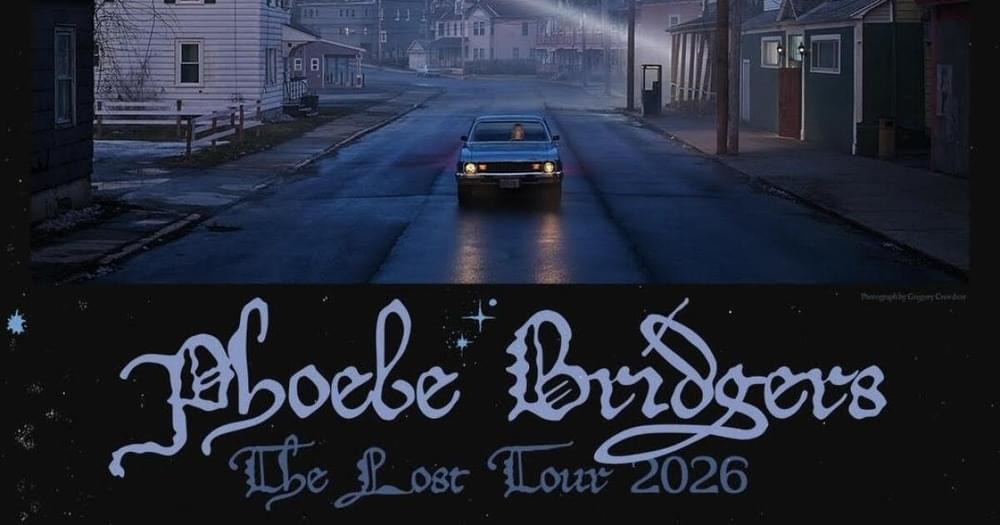
‘I can sit in the back seat/ Sometimes when the night is quiet/ I’ll turn all the lights on, like the end of the movie’
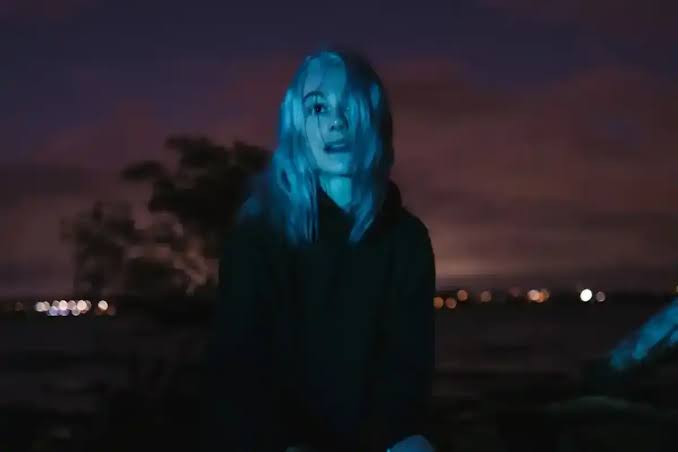
One of the promotional photos for the Lost Tour (as seen above) is echoed by this description, and the lyrics create a literal feeling of excitement that is warped by emotional nuance.
Cameron Winter features on this track, and adds a layer of raw feeling that is unmatched and unique to him. They sing about growing old and no longer being “fresh and new” in the music industry, but still persevering and accepting all sides of her:
‘All my life/ Side by side/ Hyde Jekyll Hyde/ Finally together’
Rolling piano, increasingly layered instrumentation, grief and love all combine on this song. She calls back to ‘Haunted’ and ‘Liberty Tree’ reliving childhood experiences she never got to have while simultaneously traveling somewhere by plane:
‘Trying not to look down/ Making faces at a kid on the plane’
She discusses how watching an old film got to her emotionally, and we can explore this by recognising the frequent callbacks to her childhood and her relationship with her father, as well as his death, so the notion of travelling back in time may remind her of her father.
Bridgers explores macro and microcosms within her album and by singing, ‘As above so below’, she is recognising this, pairing feelings of mortality and her earthly experiences with things greater than her.
She is searching for release, either through experiences with her partner or through mundane earthly happenings.
‘He never made it a day in a shirt/ He’s not comin’ back as a bird’
In past albums, a dead bird has been a metaphor for a broken relationship, but in ‘Lost Weekend’, it has become a sign of finality – it cannot be brought back to life, no more dysfunction because her father will not be coming back.
This song is a gentle conclusion to ‘Lost Weekend’. The fight is no longer frozen in place, recalling the first song of this album, she accepts the loss and seems to be okay with that.
‘You love me, and I won’t ever let you forget’
Bridgers no longer seems to be insecure about being vulnerable, and is fine with being known. It is a freeing, cathartic release to an emotional album.
All in all, I believe this album contains some of Bridgers’ most emotionally nuanced, complex and vulnerable lyrics. She takes feelings of chaos, grief and heartbreak. She uses her signature synthesisers, vocals, storytelling and songwriting to transform her experiences into beautiful, swirling hope that wraps itself around ‘Lost Weekend’, encasing a sonic spectacle into something flawless, melancholy yet hopeful. Absolutely beautiful.
You can now listen to Phoebe Bridgers’ new album, ‘Lost Weekend’ on Spotify, Apple Music, Youtube, and other streaming platforms.
For more music, please visit: