
6th November 2023

Listen
Listen

This morning, I was scrolling through TikTok and stumbled across creator Matt Bitter. From this, I stumbled across his ‘Speaking for 1 min on random topic’ series, where he utilises the website Unprompted to discuss random topics; from this, he will research and then eventually discuss the topic for one minute.
So, in essence, I have stolen his idea for this article. I will present you with 5 random research topics, with this potentially becoming a series just like Bitter’s. Let’s begin.
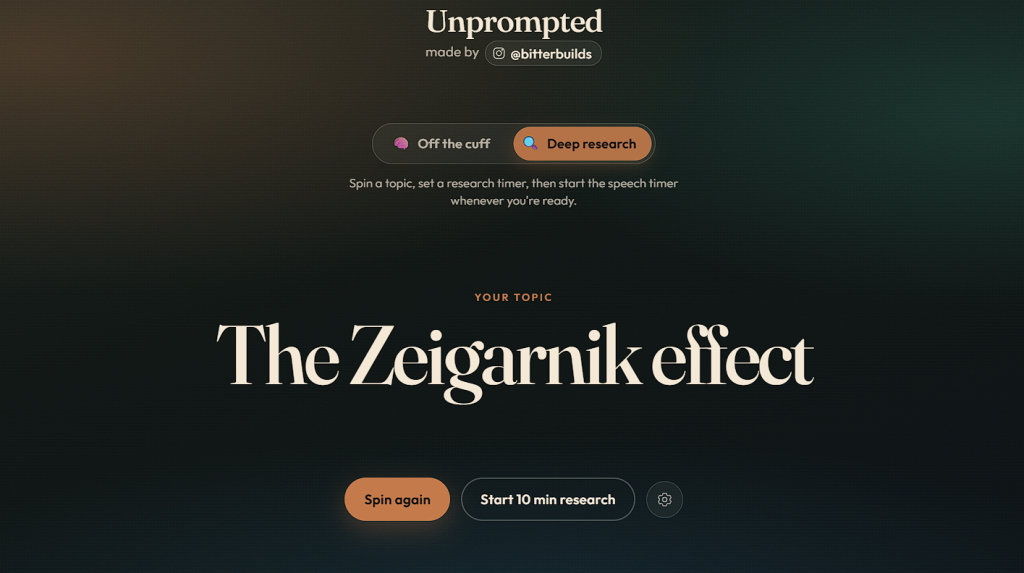
According to Psychology Today, the Zeigarnik effect is where “unfinished business (or tasks) or interrupted/uncompleted activity…hold[s] a privileged place in memory”. The term is coined after Russian psychologist Bluma Zeigarnik, who noticed that waiters could recall unpaid orders better than completed ones (Kontinou et. al, 2025, p. 2).
This is due to sustaining a cognitive burden. However, this doesn’t necessarily mean that these unfinished tasks will be resumed; if they are, this is known as another effect called the Ovsiankina effect.
Consider a game or a TV show you’re halfway through watching. The Ovsiankina effect suggests that we as humans cannot leave our experiences partially fulfilled, since we must see it through to its entirety for the sake of closure. This effect can only occur through the existence of the Zeigarnik effect.
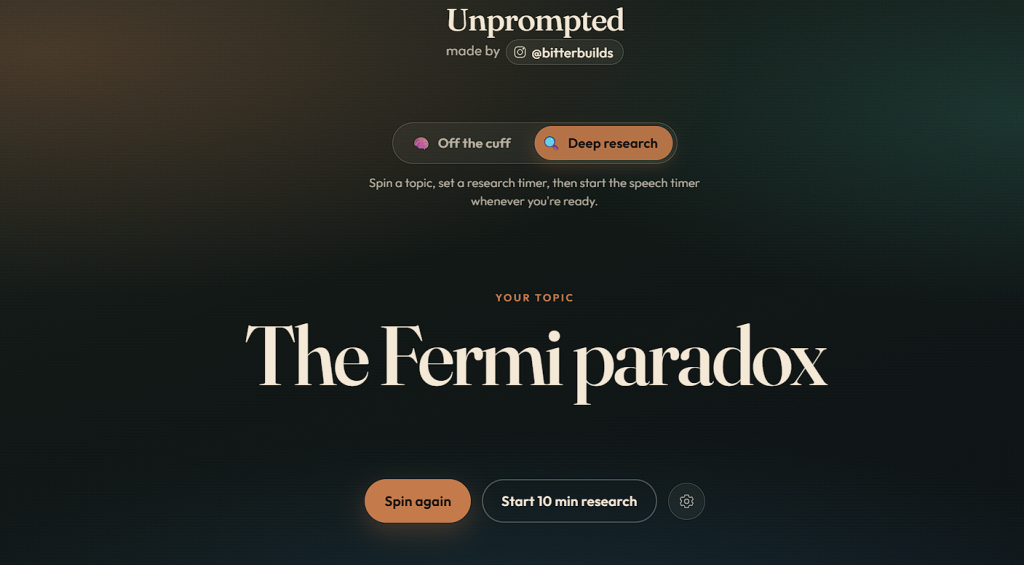
Next, we are looking at the Fermi paradox; this considers the large contradiction between the believed existence of aliens versus the evidence for said existence. The ‘where are they’ dispute, if you will.
Seti Institute states that the core argument supporting the paradox is that “Even assuming conservative estimates for spacecraft speeds or colonization pacing, spreading across the Milky Way would require dramatically less time than the galaxy’s billion-year history. Yet, we observe no signs of such galactic empires”.
They believe there are several reasons for why there is galactic silence:
However, the paradox itself is based upon limited observations; although you may not have seen any UFOs pass you by in the sky, it does not mean they don’t exist.
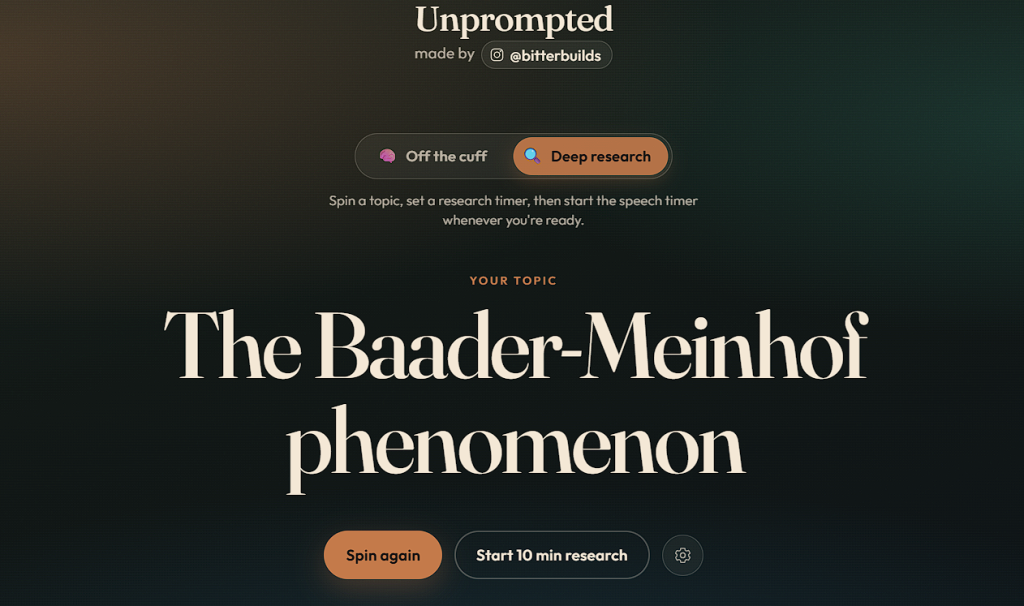
The Baader-Meinhof phenomenon – also known as the frequency illusion – is a “cognitive bias in which someone learns a novel word or concept – and then ‘suddenly’ encounters it everywhere”. This creates the impression that something is more prominent because you have discovered it far more frequently than it does, rather than it actually being culturally significant.
This is different to the recency illusion, which is when we notice something new and believe it recently originated.
Think about your TikTok’s FYP; if you like a video you’ve never seen before, you may fall into the recency bias trap. Let’s say you go back to that TikTok a few times and believe that it is a recent video. You go to check the video’s date and it says it’s from a few months ago. This is the recency illusion.
The frequency illusion suggests that the TikTok we watched in this scenario is showing up on people’s algorithms far more than it actually is (i.e. believing a video is trending/popular when it may actually not be).
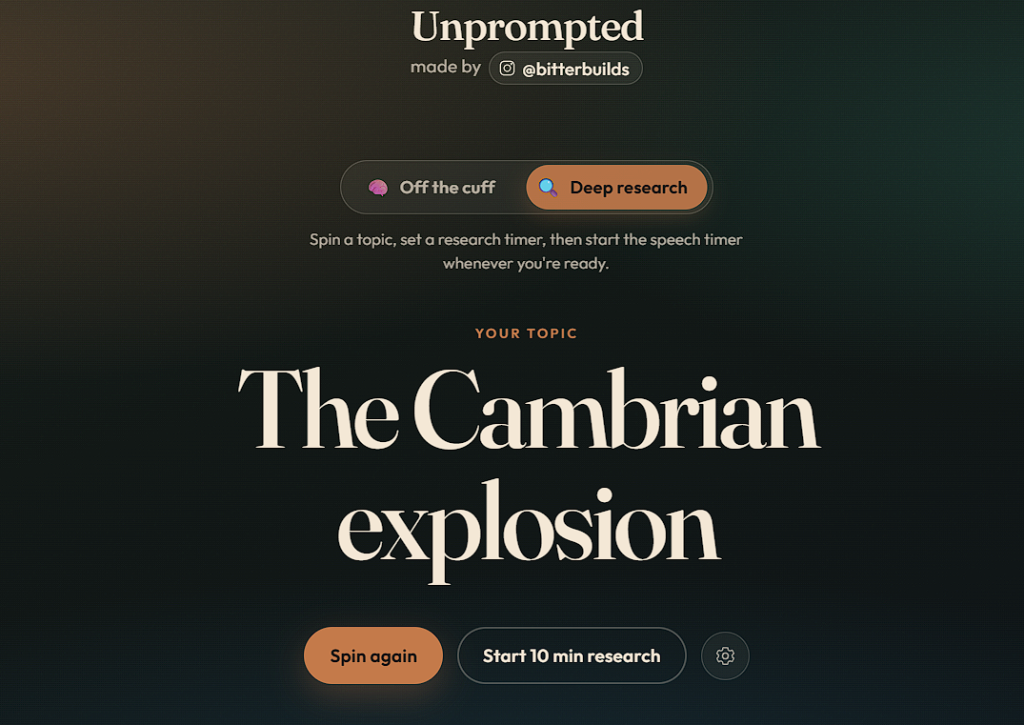
The Cambrian explosion occurred around 530 million years ago, where a huge amount of animals formed a new evolutionary transformation. According to Berkeley, in perhaps as few as 10 million years, marine animals evolved most of the basic body forms we observe within modern animal anatomy as we know it.
The organisms preserved in fossils during this period are relatives of crustaceans and starfish, alongside sponges, mollusks, worms, chordates and algae. Life found within the Cambrian period was followed by several million years of evolution, with many of the phylum diverging during the Precambrian.
Berkeley goes on to discuss the animal group of the Ediacarans, who resided within the ocean around 635 to 541 million years ago. For more info about this group, check the link here.
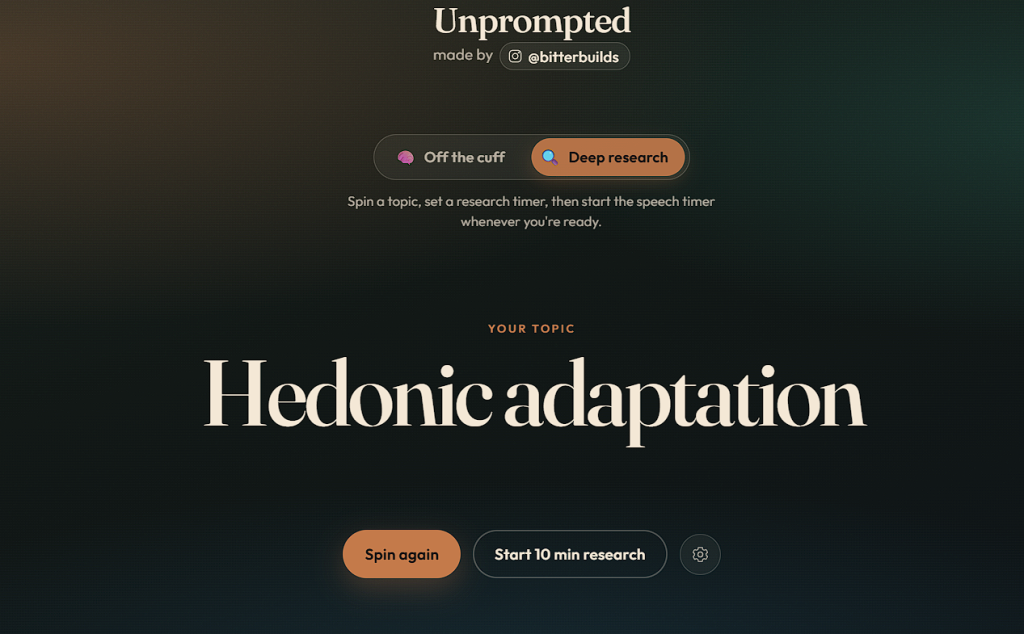
This is derived from the hedonic treadmill, which is the notion that an individual’s happiness – once rising/falling in response to positive/negative life events – regresses back to where it was before the events. Hedonic adaptation is the “process by which positive or negative effects on happiness fade over time”.
Imagine if you become friends with someone or become hyperfixated on a new hobby; this may provide a short-term sense of contentment but the events themselves won’t fundamentally alter one’s happiness levels on an everyday basis. Rather, people will modify their expectations and aspire for more to keep that same level of happiness.
This works the same for negative feelings – people won’t necessarily feel sad forever, as eventually people will shift back into the direction of happiness equilibrium. Psychology Today calls it a “double-edged sword” since it shields people from harmful environments while also restricting one’s potential happiness growth.
Imagine something else for me. You treat yourself to a takeaway or go on a night out every weekend. You do this every week. After a point, you will no longer hold these in as much high regard and take it for granted.
This is the hedonic adaptation at its finest.
So, that was 5 random research topics: the Zeigarnik effect, the Fermi paradox, the Baader-Meinhof phenomenon, the Cambrian explosion and hedonic adaptation.
Hopefully you’ve come away from this learning at least one new concept and are encouraged to try out Unprompted. It was fun to research this (even though I know hardly anything about biology).
What do you think? Feel free to email me at johnjoyce4535@gmail.com!
Follow my TikTok and drop me a message – jjoyce4535
Check out my last article: Digital Monopolisation – The Death of Physical Media
Or check out my website! Published a blog a while back called Linguistics: 101, serving as an introduction to linguistics.
Moreover, I’ve also started dabbling in music, albeit nothing too crazy: johnnywonny07 (Soundcloud)
For more arts & culture, check out the following link:
https://www.liverpoolguildstudentmedia.co.uk/category/arts-culture