6th November 2023

Listen
Listen
Last September, I visited Brussels for 3 nights with my best friend Gabrielle. It was a reasonably low cost and low stress trip. Brussels is a great city for a quick student getaway, with good transport links to fun day-trips.
I’m very fortunate to live an hour away from London St Pancras Station, which is where the Eurostar to Brussels departs from. We travelled on the 9:01 service on a Tuesday (outside of the school holidays) which got us in around 12:00, and returned on the 17:56 Friday train which pulled into St Pancras at about 19:00. This cost us £180 per person, plus £40 on UK trains to and from St Pancras.
I would thoroughly recommend the Eurostar for Brussels or any cities of the cities it services. While there’s always a chance of unfortunate incidents and unprecedented delays, I think the Eurostar is much less stressful than visiting an airport. The trains are very comfortable and our experience through security couldn’t have been better. It’s also a much more sustainable choice than flying.
We stayed in an Airbnb which was roughly 25 minutes walk from the city centre and close to Bruxelles-Central Station. The Airbnb itself was clean, comfortable and had good facilities. It wasn’t the nicest part of the city, but a lot of that was psychological. We reminded ourselves that it was no ‘worse’ than the less gentrified bits of our uni cities. I wouldn’t rule out staying here again, but I would look at all my options if visiting again. The only other thing to note was that the bathroom had the tiniest shower I have ever used in my entire life, and is on the 4th floor so not suitable for people with mobility issues.
The Airbnb only cost £135 per person, and this would obviously be lower if sharing between three (our four if two of you are happy to share a double)
https://www.airbnb.co.uk/rooms/37361262?source_impression_id=p3_1767908164_P3OuChzRqXxNaxK3
Where Brussels falls down for me was the food. Gabrielle is vegetarian which did limit our options slightly, but regardless of that we struggled to find places to eat. We might have just not looked in the right places, but we didn’t walk past restaurants or food markets that looked ‘right’ for us. The majority of places were tourist traps with sky-high prices. For breakfasts and lunches, we picked bits and bobs up from Carrefour. LGSM Marketing Officer Chloe recommended a food market called ‘Wolf’ which she had visited while inter-railing the previous summer, and we ended up eating there twice. Wolf has 17 concessions and is basically the Belgian Bold Street Market. Food prices were really reasonable, and alcoholic drinks were so much cheaper than the UK (the cheapest beer is €2.90, €0.40 cheaper than a coke)
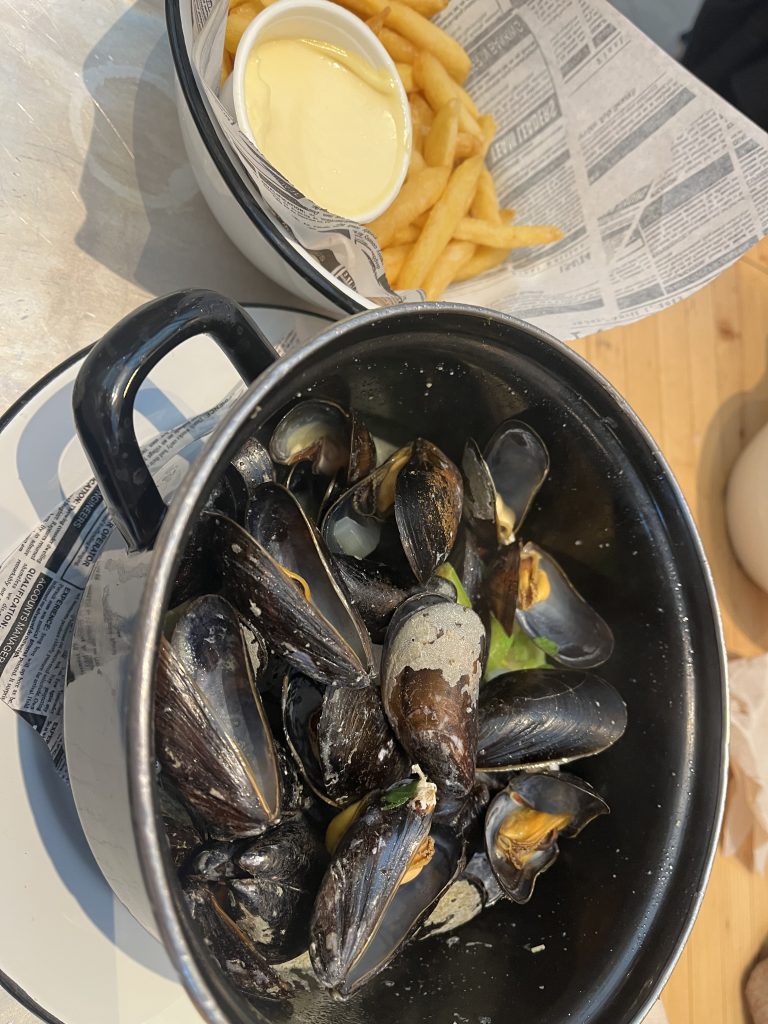
On our first trip I had moule frittes which cost €19. The portion was very sizeable and the quality of the mussels was fantastic.

On the second night I had two pork baos for €15.90. They were a little too salty, but the price was still fair.
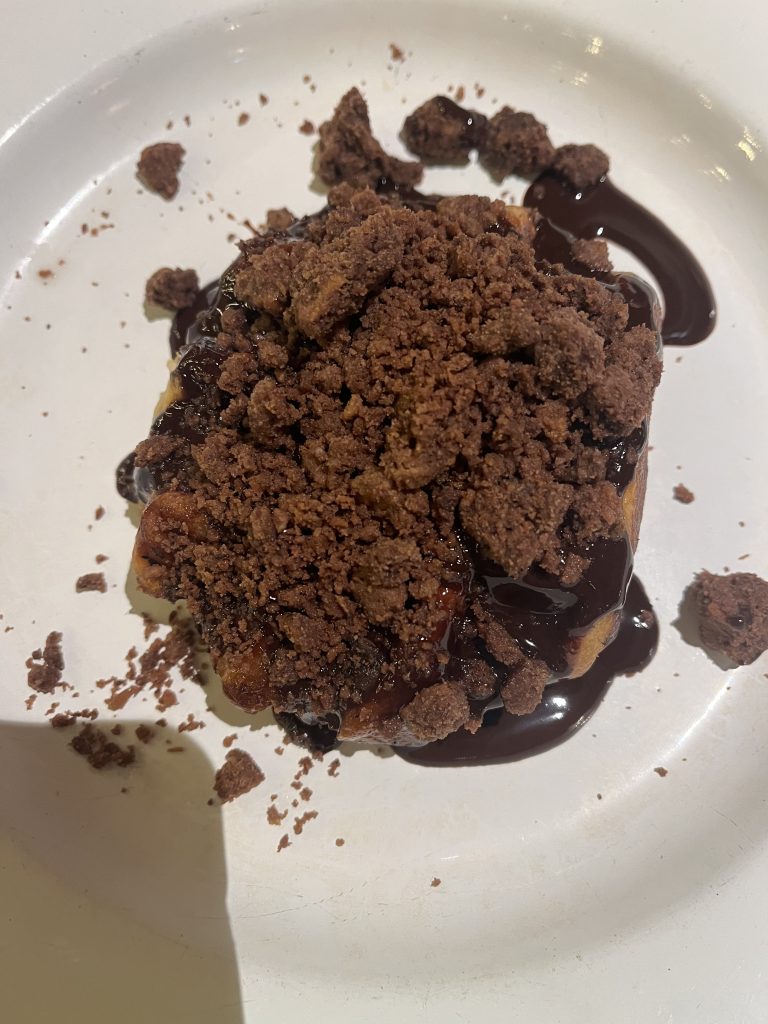
I also shared a €12.50 waffle with Gabrielle which we both thoroughly enjoyed!
On a day trip to Ghent (more on that to follow) we visited the Dok Brewing Company. This micro-brewery is in an industrial estate out of the city centre (it does feel a bit like you’re somewhere you shouldn’t be) but is definitely worth trekking over to.
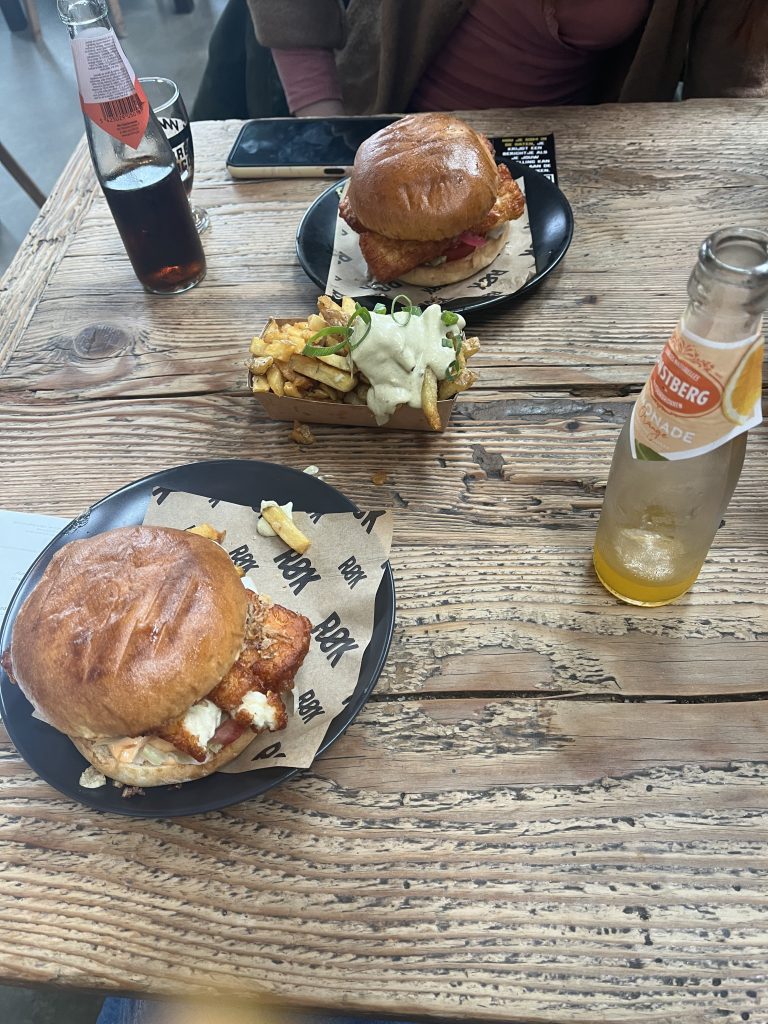
We both had a halloumi burger. This was genuinely one of the best things I’ve ever eaten and I think about it all the time. It came to €21 with fries and a drink.
We found all the public transport in Brussels and Belgium overall to be super straightforward. We used the busses and the metro a few times, but the city is very walkable. The STIB-MIVB app is helpful to look at your travel options and paid you can pay contactless. It never cost us more than a few euros.
If you find yourself on a rural bus while lost in Waterloo, you will need change as they don’t accept contactless… but more on that later.
The national rail is also exceptionally straightforward. Tickets are booked on the SNCB app which is literally just Belgian trainline. Youth tickets are available for people under 26, so you can save up to 40% on your journeys. I’d say train prices are a little cheaper than the UK, as it cost us €15.40 for a return to Ghent.
I will just note that Brussels is a bi-lingual city, so signs and directions are in French and Dutch. Don’t be alarmed that things have two names, they do refer to the same place (e.g. Bruxelles-Midi/Brussel-Zuid). If you travel out of the city, some regions only use one language. m
Brussels itself isn’t the most jam-packed city. Lots of people say you can do it in a day which I disagree with, but without a doubt we couldn’t have filled 4 days without some day-trips. Both Gabrielle and I are history students, so our itinerary is definitely not everyone’s cup of tea. If you’re not a fan of history and art galleries, then Brussels potentially doesn’t have enough to keep you interested for as long as we visited.
One of the big perks we discovered in Brussels was student admission to lots of attractions. Bring your physical Uni ID card and don’t be scared to ask for student admission. Lots of the staff in places we visited asked us if we were students while we were paying for tickets, and some weren’t bothered about seeing our IDs.
12:00- Arrived in Brussels
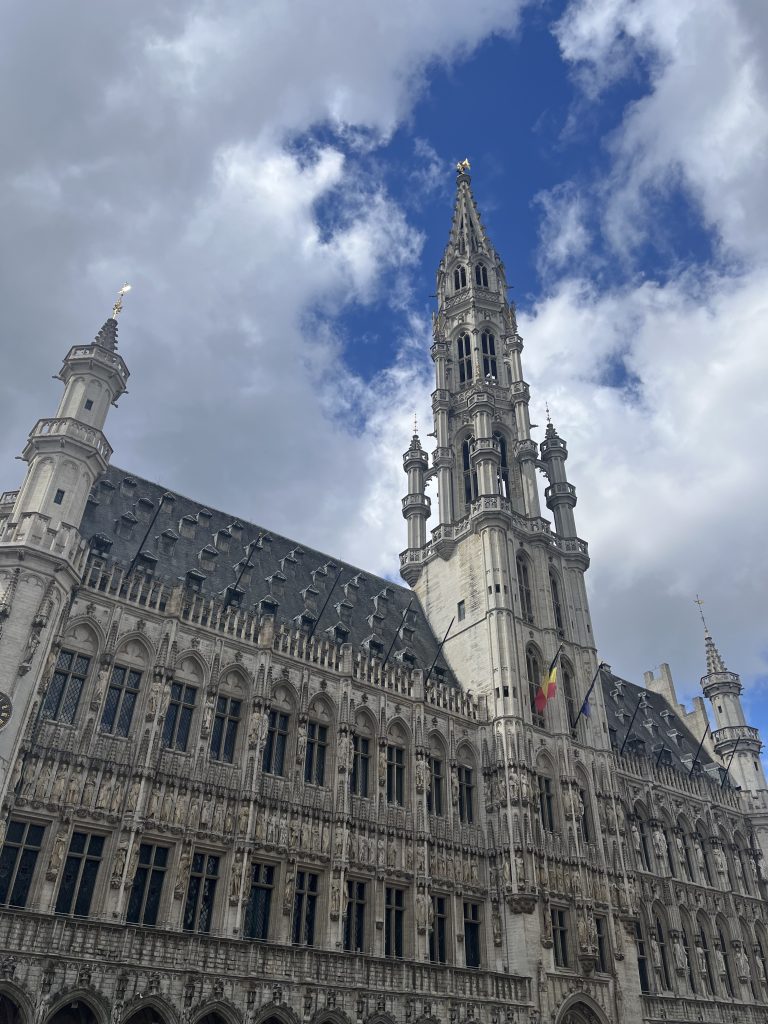
13:00- We took the number 48 Bus to the Grand-Place/Grote Markt. It didn’t take long for us to look around but it was a nice start to the trip. We then walked over to the Brussels Beer Museum and grabbed lunch from Carrefour which we ate outside the museum.
14:00- We went over to see the Manneken Pis. It really doesn’t take long, but it’s worth just going to have a look. We then walked through the Les Galeries Royales Saint-Hubert, where we nearly got swept up in a school trip and stopped at a nice bookshop called Tropismes.
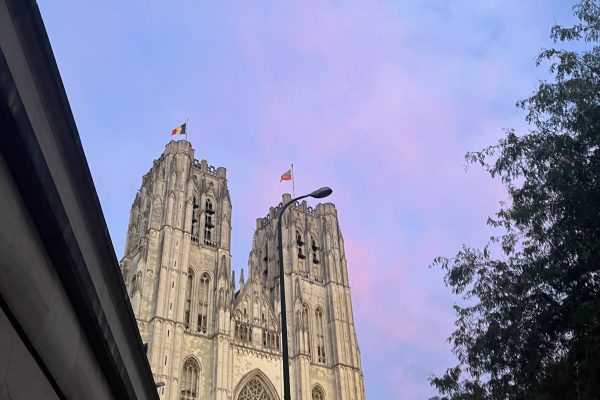
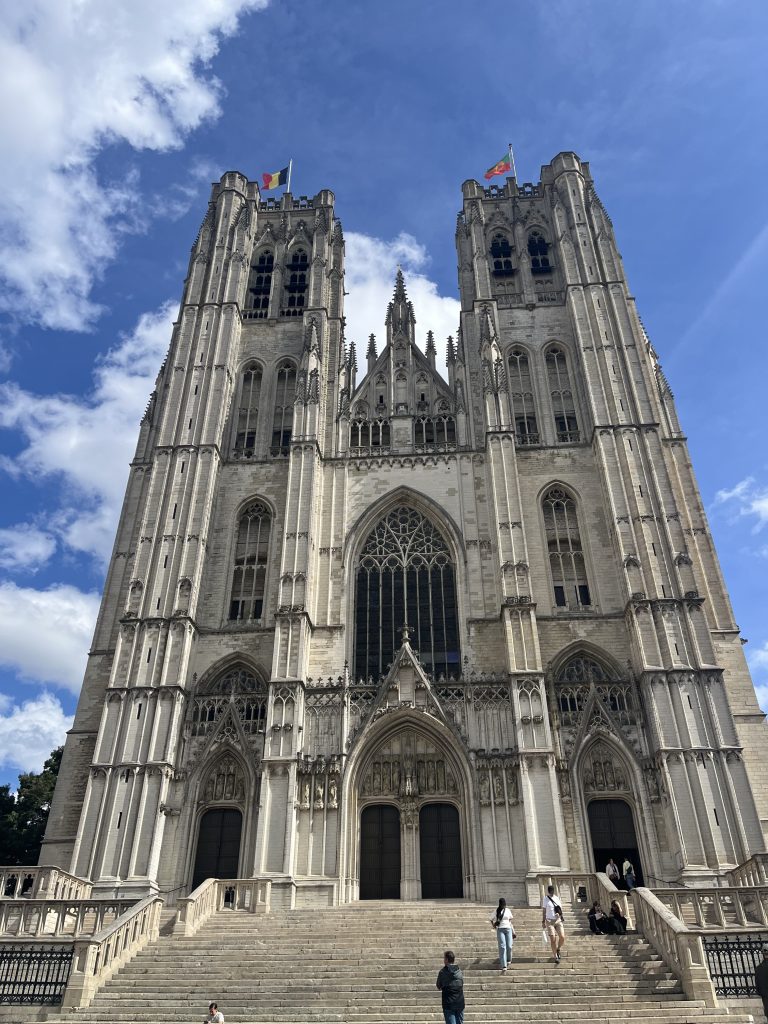
14:30- St Michael and St Gudula Cathedral is lovely. If you’re not a cathedral fan then this isn’t an essential add on to your trip itinerary but we enjoyed looking around and having a sit down out of the sun. It’s also free to enter.
15:30- We were knackered after a very early start so decided to just head to our Airbnb (and check it actually existed). We were about 30 minutes walk away from the cathedral.
16:00- After confirming the Airbnb was in fact real, we spent some time reading and watching N’oubliez pas les paroles our new favourite French language game show.
18:00- We walked back to the city centre for our first of two dinners in Wolf and then headed back for an early night
9:00- We made it to Brussels Central station for an early train to Ghent. It takes about half an hour.
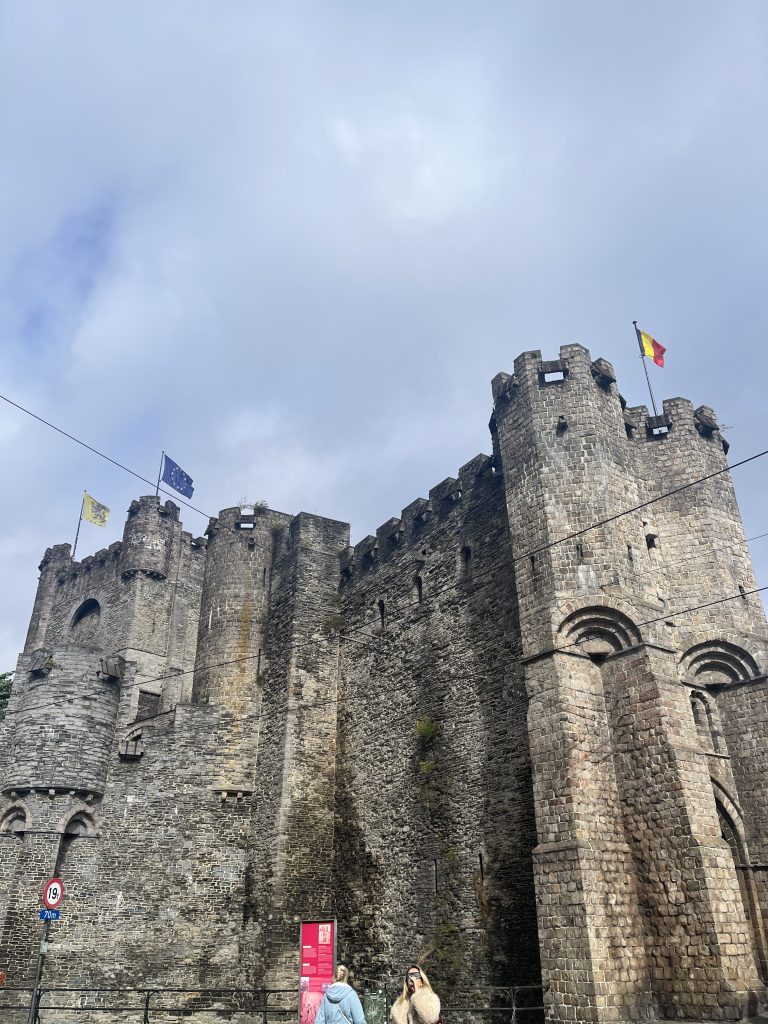
10:00- After having a quick look around the city centre, we headed over to Gravensteen- Ghent castle. It cost us £6.97 to get in on a Student Ticket and it was well worth the price. We spent about 2 hours there exploring and listening to the ‘comedy tour’ which I thoroughly recommend. The Belgian humour isn’t completely aligned with mine, I learnt a lot on the tour and enjoyed the castle’s architecture.
12:00- We then walked over to the Dok Brewing Company for our lunch. It was a little way out of the city, any annoyingly the polar opposite side to our next stop!
14:00- After lunch and a brief stop to look at St Bravo’s Cathedral from the outside (it’s over £10 to get in), we arrived at MSK (Ghent Museum of Fine Arts). The receptionist let us in for free as he assumed we were under 18, but if you’re less youthful looking then it should cost you about £2.50. I thoroughly enjoyed MSK. It’s the oldest museum in Belgium (and actually older than the country itself), and contains lots of Dutch and Flemish art. It’s a very mixed collection, so there is probably a painting for everyone.
16:00- We headed back to Gent Sint Pieters station. Our train back was delayed, but once arriving back in Brussels we grabbed some snacks and headed back to our Airbnb for the evening.
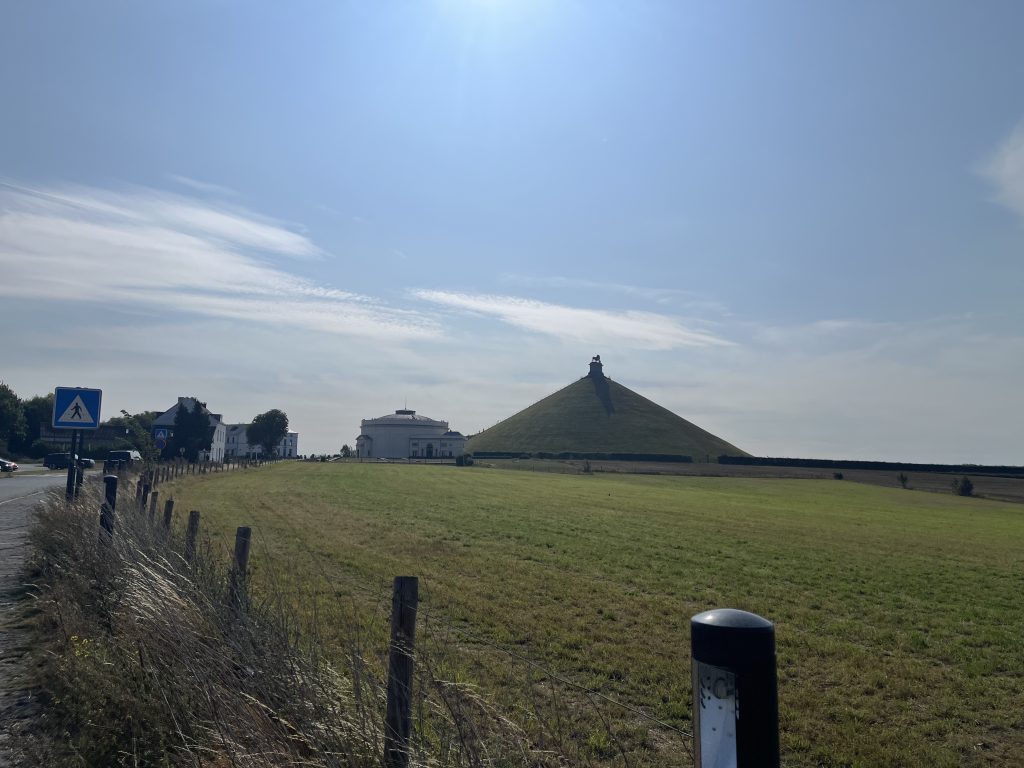
9:00- My My. At 9 am the train to Waterloo did surrender… Now the ABBA joke is out of my system, I can explain that we went to visit the Waterloo battlefields. Now, there is one very, very crucial thing to tell you. Do not get off the train off at Waterloo station. The station for the Waterloo Battlefield is Braine-l’Alleud, the next stop after Waterloo. If you get off at Waterloo, then you will need to take the bus to Braine-l’Alleud as it is too far to walk.
10:30- Once you have successfully arrived at The Waterloo 1815 Memorial Museum, it costs £19.17 to get in on a student ticket in ‘high season’. This was the most expensive activity on the trip, but it was absolutely fantastic. The main gallery is very modern and well done, and even features a 3D film version of the battle which makes you feel like a solider. There is also a panorama painting, and you can climb up the Cœur de Lion mound which has panoramic views of the Battlefield. If you don’t like history then this day-trip is definitely not the one for you, but if you are a history fan then it is well worth a trip. Myself and Gabrielle were the only attendees under the age of 40, but don’t let that stop you.
14:00- We headed back to Brussels after this to visit Musee Royal Beaux Arts, which includes the Musee Magritte. We didn’t enjoy this as much as MSK, but there are still some fantastic paintings and it is worth a trip.
16:30- Creatures of habit, we had another afternoon reading session with N’oubliez pas les paroles
18:00- And then went back to Wolf for our second evening meal.
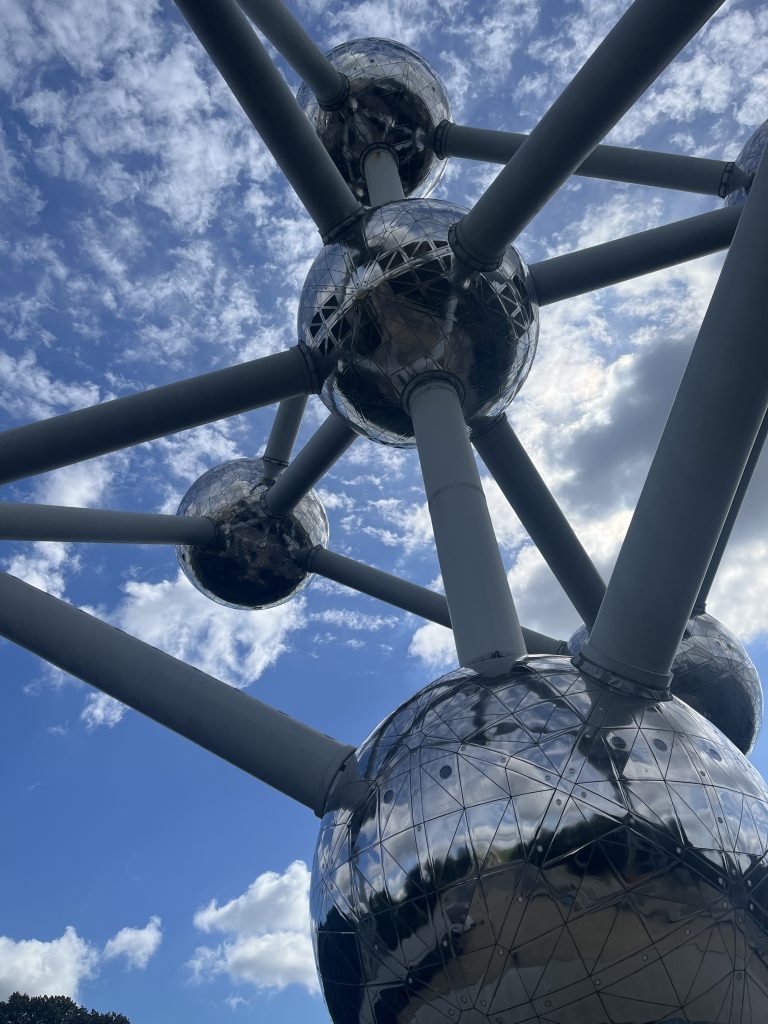
10:00- We took the metro over to the Atomium. You need to take line 6 in the direction of Koning Boudewijn / Roi Baudouin and get off at Heizel / Heysel station. You go past the Atomium on the way, so it’s very obvious when you need to get off. It only took us about 30 minutes
10:30- The Atomium only cost £7.38 to get into which I honestly thought was a bargain in comparison to UK tourist attractions. It also has free lockers, so it’s a good spot to save for your last day if you’ve checked out early with your bags. The Atomium tour takes you all the way to the top to view Brussels from 92 meters above. You then make your way back to the bottom, and travel through some of the spheres. There is a permanent exhibit about the 1958 Expo (which the Atomium was built for) and the history of the structure. You can also watch light shows which illuminate the other spheres. We spent a lot of time just sitting and watching the lights which was a nice end to a busy trip.
12:00- Entry to the Atomium also includes admission to the nearby Design Museum. We passed an hour here, but if you’re crunched for time this was my least favourite part of the trip. There isn’t a whole lot to see but it was cool and very quiet.
13:30- We made it back to Brussels city centre and grabbed some lunch. We then did a small bit of souvenir shopping and decided to walk over to the station slowly as we didn’t have time for much else.
15:30- We were very early for the train and in hindsight could have picked an early return journey, but ww didn’t have hours to kill.
We didn’t go ‘shopping’ at any point during the trip, so I can’t give any particular recommendations on that front. Gabrielle doesn’t drink so I also don’t have any specific recommendations for bars, but Wolf was good for drinks as well as food.
Finally, we also couldn’t go into any of the Royal Palaces as they are only open during the summer months.
In total, my trip to Brussels cost £540. Prices for travel, accommodation and food were all fair and I think we got our money’s worth.
It’s a very straightforward to navigate city, so if you’re a nervous or inexperienced traveller I would recommend it as a good mini break.
If you’re not a fan of history, then I think you would struggle to fill a 4 day itinerary so a shorter trip may be better but I still think you would have a pleasant time.
I won’t be rushing back to Brussels itself as I do feel like I’ve ‘completed’ it, but I would definitely visit other locations in Belgium and don’t rule out a trip back in the future.
For more travel guides, please click here: https://www.liverpoolguildstudentmedia.co.uk/category/lifestyle/