6th November 2023

Listen
Listen
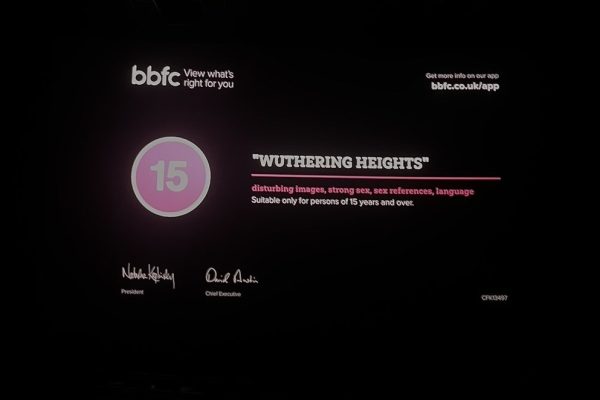

Promotional material for “Wuthering Heights” was everywhere. So despite my scepticism from the trailer, I went to see the film with an open mind. I knew it was not going to be 100% book accurate, but I was prepared to be surprised, as I usually do love a rom-com or a mindless fan-fiction.
However, I could not help thinking this adaptation is the perfect display of the rise of anti-intellectualism in mainstream media. This is demonstrated particularly via the casting of Heathcliff. Also, through the ‘wattpad’ification of the tragic and abusive connection between Cathy and Heathcliff.
Heathcliff is famously racially ambiguous in the novel Wuthering Heights. The removal of this in the new adaptation contributes to the decline in representation and media literacy. As Heathcliff is the main character, he drives the plot of the novel. Rescued from the docks of Liverpool, he is frequently referred to as a ‘gypsy’ and ‘dark-skinned’.
“Who knows but your father was Emperor of China and your mother an Indian Queen”
One of the main plot points of the first half of the novel is Hindley ostracising and abusing Heathcliff. Hindley mainly targets Heathcliff for his race. This causes him to be a social outcast and a victim of abuse. Which then drives him to continue that cycle of abuse on Isabella and his son, Linton. By removing the character of Hindley, it directly absolves the reason for Heathcliff’s pursuit of abuse. Therefore, it corrupts the revolutionary social commentary Emily Brontë was making about race and class differences. In the novel, Heathcliff commits heinous violent abuse against Cathy, Isabella, and the rest of his family. By casting Heathcliff as a white man and removing the characters that triggered his internal rage, Fennel has made this complex exploration of race redundant. Heathcliff’s rage is systemically ingrained in him, and he is a victim of the racism and othering of society’s prejudice.
Focusing on the lust and desire of Heathcliff and Cathy, the film feels shallow and stale. It mimics the storyline of many other modern romance movies. Examples being the Notebook and Fifty Shades of Grey. Over the centuries, the presentation of lust and desire has obviously evolved as purity culture declined. However, I don’t think that means directors should simplify the plot of complex classical novels to satisfy modern viewers. This movie attempts to put literature in the language of conventional Hollywood and misses the point of the original.
In the movie, the two characters Cathy and Heathcliff, are engrossed in obsession and vengeance. As the audience, I was not satisfied with the depth of their connection. Frequently referred to by critics as solipsism, they have a metaphysical connection that transcends love. Solipsism is the ‘view or theory that the self is all that can be known to exist’. Therefore, believing they share a soul, their connection is much deeper than lust. This adaptation undermines the famous quote, ‘whatever our souls are made of, his and mine are the same’. A narcissistic identification, they do not view each other as separate people but extensions of themselves. Furthermore, both represent to each other what they cannot have. Emily Brontë emphasises the cruel restraints of society. Heathcliff desires Cathy’s status, and Cathy desires Heathcliff’s freedom. The affair occurring undermines this societal barrier that would have existed at the time.
Across social media, people have dismissed valid criticisms, like mine, and claimed the movie is just fun and easy to watch. Consequently, this attitude reinforces the idea that intellectualism is a curse or cancer that makes things unenjoyable. This is what makes the lack of critical thinking when watching this movie so dangerous. By removing the complex and uncomfortable scenes to make it more palatable to the modern audience, corrupted by short attention spans, it destroys the art of meta-theatre. Meta-theatre is notorious for forcing the audience to question the media they are consuming. Palatable content like this confirms that audiences don’t need media literacy or to think for themselves. With the rise of AI, now more than ever, we need to question the content we consume.
Brontë, Emily, Wuthering Heights, Penguin Classics, 2012
Fennell, Emerald (Director). (2026). “Wuthering Heights” [Film]. Warner Bros.
For more opinion pieces, click here: https://www.liverpoolguildstudentmedia.co.uk/category/opinion/